

The cold hard truth is that terrorist attacks like Bondi rarely, if ever, emerge from a vacuum. They are born within broader extremist ideological environments; online networks, informal preaching circles, and social environments where rigid, exclusionary worldviews are normalized and reinforced.
If lessons are to be learned from difficult moments, hard—but very necessary—questions need to be raised: what about others radicalized in the very same setting?

Firstly, we need to understand how Naveed Akram, the son (and the younger of the two attackers), arrived at the point of no-return. Reports citing counterterrorism officials have centrally focused on Naveed’s following of Wisam Haddad, who’s been described as an influential figure in the radical milieu of Sydney’s south-west.
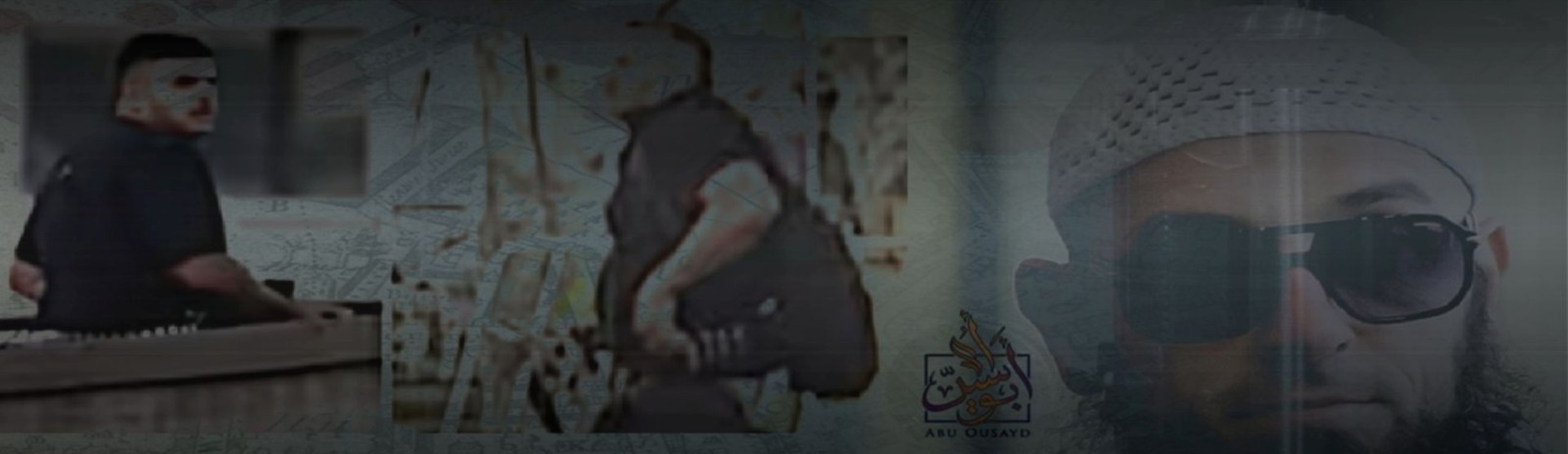
Haddad, more commonly known as Abu Ousayd, is a preacher whose extremist sermons have been the subject of Federal Court proceedings related to antisemitic and dehumanizing commentary. Naveed was a regular worshipper, according to multiple reports, at the Al Madina Dawah Centre (associated with Haddad), which security agencies have consistently scrutinized for potentially exposing attendees to radical influences.
An ABC video investigation in the aftermath of Bondi also highlighted Naveed’s role as a street preacher for Haddad’s “Dawah Van” organization. Haddad has since denied his reported connection to the shooters.
It’s always hard to pinpoint exactly when, how, or at what point, someone like Naveed became critically radicalized. But understanding the environments he was exposed to in the years leading up to his spree is an important part of understanding how his radicalization developed. The Australian authorities, having found themselves at a crossroads, now seem increasingly compelled to leave no stones unturned with the recent commissioning of the royal inquiry.
Truly addressing the situation now demands that we shine a brighter light on those same environments—because the networks and ideological environments surrounding an individual attack can persist long after the attack itself.
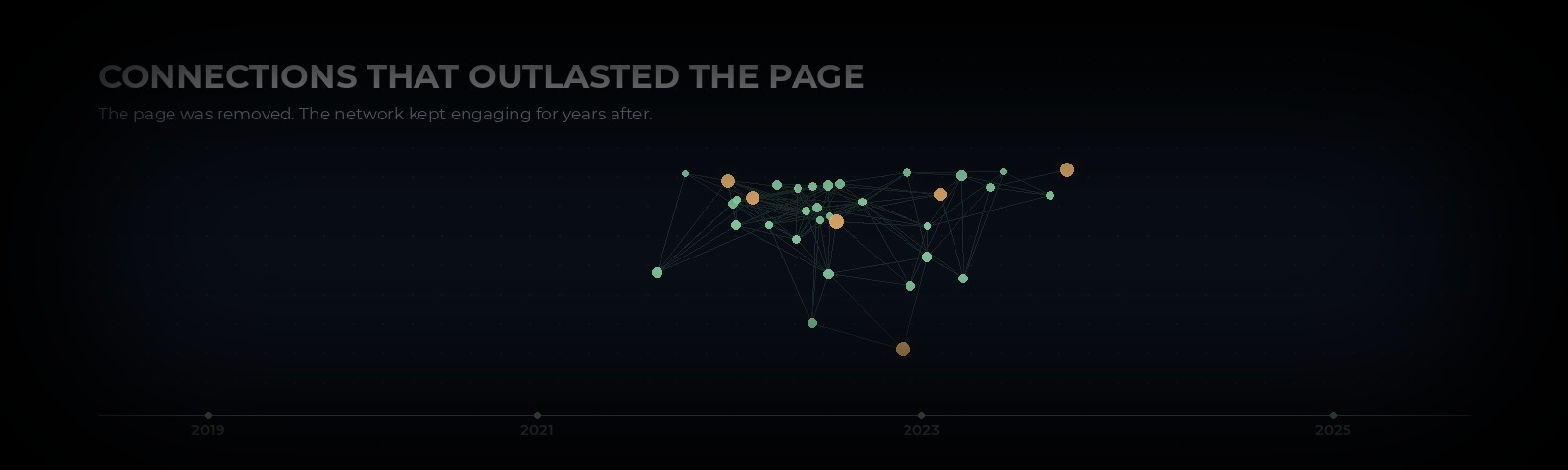
Satya’s OSINT technology tracked elements of the online networks associated with Abu Ousayd over a number of years. Between 2019-21, he regularly spread his ideology on a now-removed Facebook page, publishing posts promoting extremist ideology, anti-Western sentiment and anti-democratic ideas, often using jihadist terminology directed at the “disbelievers”. But the significance of the page isn't simply what Haddad himself was publishing. It's who was interacting with it — and what those connections reveal when viewed over time.
Using Satya’s OSINT and network-analysis capabilities, we identified a number of Australia-based profiles connected to the page who continued to engage with radical content years after the page itself had disappeared. Some had been connected to the network since 2019, with activity extending into 2026.
Several of these individuals had not appeared in media reporting and may have been unknown to Australian law-enforcement agencies. We are deliberately not publishing the identities of these individuals. The purpose of this investigation was not to publicly identify or label private individuals, but to demonstrate how seemingly disconnected online activity can reveal persistent networks and patterns that may warrant further investigation.
The profiles showed a range of activity. One Sydney-based profile, for example, had been tracked since 2019 and continued supporting material promoting anti-democratic ideas and using jihadist terminology in 2025. Another Sydney-based profile, connected to the network since 2021, was observed supporting content praising a Salafi-jihadist group that had operated in the Gaza Strip.
More significantly, the same network also intersected with individuals who had previously come to the attention of authorities in connection with Islamic State activity. The investigation identified links to two Australian individuals who had previously been arrested or detained in connection with Islamic State-related activity.
Taken together, these connections change the question.
It's no longer simply about how one individual became radicalized, or whether one preacher can be directly linked to one terrorist attack. It is whether authorities can identify the wider networks and environments in which radical ideas are repeatedly produced, shared and reinforced, before an individual reaches the point of no return.

This is where traditional approaches to threat detection can become difficult.
An individual may not be openly planning an attack. They may never post an explicit threat. They may not appear on an intelligence watchlist. But they can still occupy a network where extremist material is repeatedly shared, ideological narratives are reinforced, and connections to known extremist actors persist over years.
Satya’s investigation illustrates how these signals can become visible when they are viewed collectively rather than individually. The connection mapping revealed relationships between the Abu Ousayd Al-Islami network, Australia-based profiles that continued to engage with radical content, and individuals already associated with Islamic State activity.
That doesn't mean every person connected to the network represents a terrorist threat. Nor does online interaction, by itself, establish criminality or intent.What it does provide is something potentially more useful for intelligence and security teams:context.
A single post can be ambiguous. A single association can be incidental. But when years of activity, geographic location, interpersonal relationships and connections to known extremist actors are mapped together, patterns that are difficult to see in isolation can become considerably easier to investigate.
And there are indications that the broader ecosystem has not simply disappeared.
In a recent example, a Melbourne preacher with links to Haddad and whose Al Bayyinah Islamic Centre received support from him, delivered a sermon in July in which he described Jews, Christians and others as “enemies of Islam” and spoke of a duty to “take up arms” against them. He also reportedly visited Haddad’s Bankstown centre in early 2025.
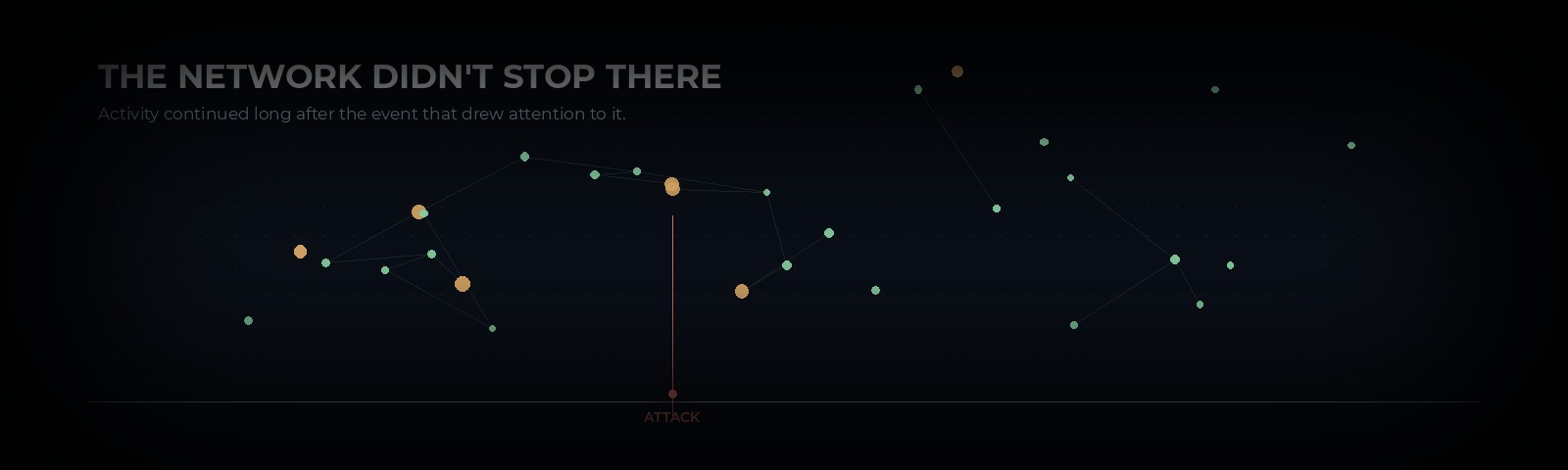
This reinforces a point that is easy to lose sight of after an attack: the ideological and social environments surrounding violent extremism do not necessarily disappear when the perpetrators are gone.
That is precisely why the focus cannot end with identifying the people who carried out an attack. The harder task is understanding the networks, relationships and ideological ecosystems that may continue operating around them. More importantly, it's about identifying those flashing signals before they develop into another Bondi.
Satya Digital Ltd. is GDPR compliant company, meeting the requirements set by the EU & UK for handling personal data, alongside various privacy protection & information security laws in the US.
.svg)
.svg)
